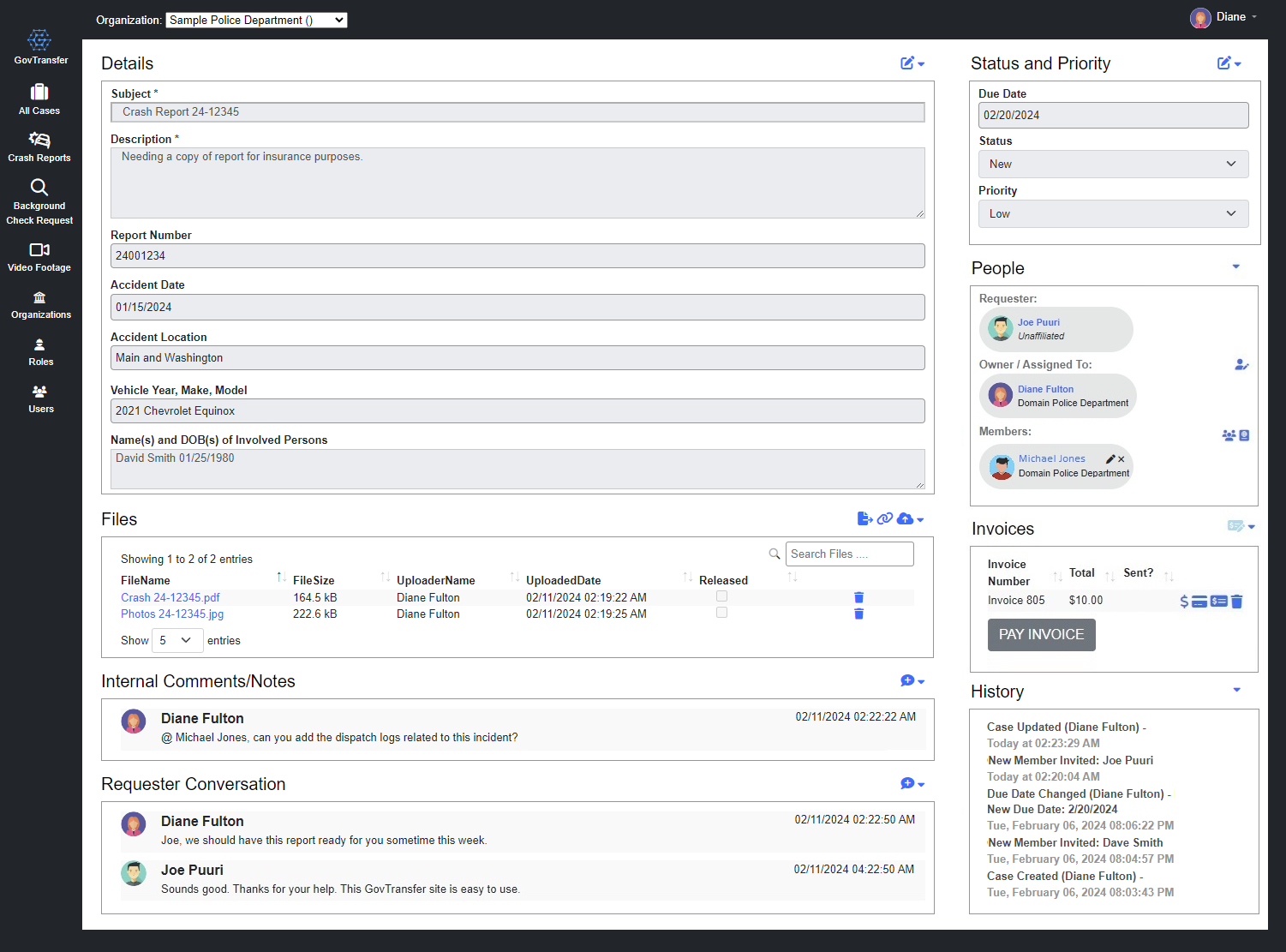
Law enforcement agencies face ever-increasing volumes of data, complex jurisdictional challenges, and the constant pressure to resolve cases quickly and accurately. Modern case management software has become an essential tool for streamlining investigations, improving collaboration, and safeguarding evidence throughout the investigative lifecycle. By integrating digital workflows, secure data storage, and real-time analytics, agencies can focus on the core mission of public safety while reducing administrative bottlenecks and human error.
Key Benefits of Case Management Software for Law Enforcement
Enhanced Data Organization
- Centralized repository for reports, witness statements, forensic images, and chain-of-custody logs.
- Advanced search functions that filter by case number, suspect name, or evidence type, saving valuable time.
- Automated indexing ensures that every piece of information is tagged correctly for future retrieval.
Improved Collaboration Across Agencies
- Secure, role-based access allows local, state, and federal partners to share critical details without compromising confidentiality.
- Real-time notifications keep investigators informed of updates, new leads, or pending tasks.
- Integrated communication tools replace fragmented email threads with a single, auditable conversation log.
Streamlined Workflow Automation
- Pre-defined templates for common case types (e.g., narcotics, homicide, cybercrime) standardize documentation.
- Automated task assignments trigger reminders for evidence submission, court filing deadlines, and interview follow-ups.
- Audit trails record every action, supporting compliance with legal standards and internal policies.
Core Features That Drive Investigation Efficiency
Secure Evidence Management
Digital evidence, from body-camera footage to DNA profiles, requires strict chain-of-custody controls. Modern platforms encrypt files at rest and in transit, log every access event, and provide tamper-evident seals that stand up in court. This level of security not only protects the integrity of the evidence but also reduces the administrative burden of manual logs.
Integrated Analytics and Reporting
Predictive analytics can highlight patterns across multiple cases, such as recurring locations of criminal activity or links between seemingly unrelated suspects. Customizable dashboards give supervisors a quick snapshot of case status, resource allocation, and performance metrics, enabling data-driven decision making.
Mobile Accessibility
Field officers can capture statements, upload photos, and update case status directly from tablets or smartphones. Offline functionality ensures that work continues even in areas with limited connectivity, with automatic synchronization once a secure network is available.
Implementation Considerations for Agencies
- Scalability: Choose a solution that can grow with the agency’s needs, supporting everything from a single precinct to a multi-state task force.
- Interoperability: Ensure the software integrates with existing records management systems (RMS), computer-aided dispatch (CAD), and forensic databases.
- Training & Support: Comprehensive onboarding and ongoing technical assistance are vital for user adoption and long-term success.
- Compliance: Verify that the platform meets local, state, and federal regulations regarding data retention, privacy, and evidence handling.
For agencies seeking guidance on selecting the right technology stack, Discover expert strategies here offers a curated set of best practices and case studies.
Real-World Impact: Case Studies
Several departments have reported measurable improvements after deploying case management solutions:
- Reduced case backlog: One metropolitan police force cut its unresolved case count by 30% within six months, thanks to automated task routing and real-time progress tracking.
- Faster evidence processing: A county sheriff’s office accelerated forensic lab submissions by 25% after integrating secure digital evidence uploads.
- Improved inter-agency coordination: A regional task force solving a multi-jurisdictional drug ring credited a shared case platform for seamless communication and joint reporting.
To explore detailed success stories and learn about tailored solutions, Learn about our tailored solutions provides in-depth analysis and implementation roadmaps.
Future Trends Shaping Case Management
Artificial Intelligence and Machine Learning
AI can automate routine tasks such as transcription of interview recordings, flagging of relevant keywords, and even predictive risk scoring for suspects. As algorithms become more sophisticated, they will assist investigators in identifying hidden connections across massive data sets.
Cloud-First Architecture
Moving case data to the cloud offers unparalleled scalability, disaster recovery, and remote access capabilities. Secure, encrypted cloud environments also simplify compliance with evolving data-protection statutes.
Blockchain for Evidence Integrity
Emerging blockchain applications provide immutable logs of evidence handling, further strengthening courtroom admissibility and public trust.
For a deeper dive into upcoming technologies and practical guidance, Explore advanced guides and tips is a valuable resource.
Best Practices for Maximizing Software ROI
- Conduct a thorough needs assessment before selection to align features with agency priorities.
- Implement phased rollouts, starting with pilot units to refine workflows and gather feedback.
- Establish clear metrics, such as case resolution time, evidence turnaround, and user satisfaction, to measure impact.
- Maintain continuous training programs to keep staff up-to-date with new functionalities.
Organizations interested in practical steps and performance benchmarks can Find out more about this approach through comprehensive whitepapers and webinars.
Conclusion
Case management software is no longer a luxury but a necessity for modern law enforcement. By centralizing data, automating workflows, and enabling secure collaboration, these platforms empower investigators to focus on what matters most, solving crimes and protecting communities. As technology continues to evolve, agencies that adopt adaptable, intelligence-driven solutions will stay ahead of emerging threats while maintaining the highest standards of evidence integrity and operational efficiency.
About the Author